How Modern Moms Can Save Money With 1940s Homemaking Tips
Created February 10, 2023; Updated January 2026
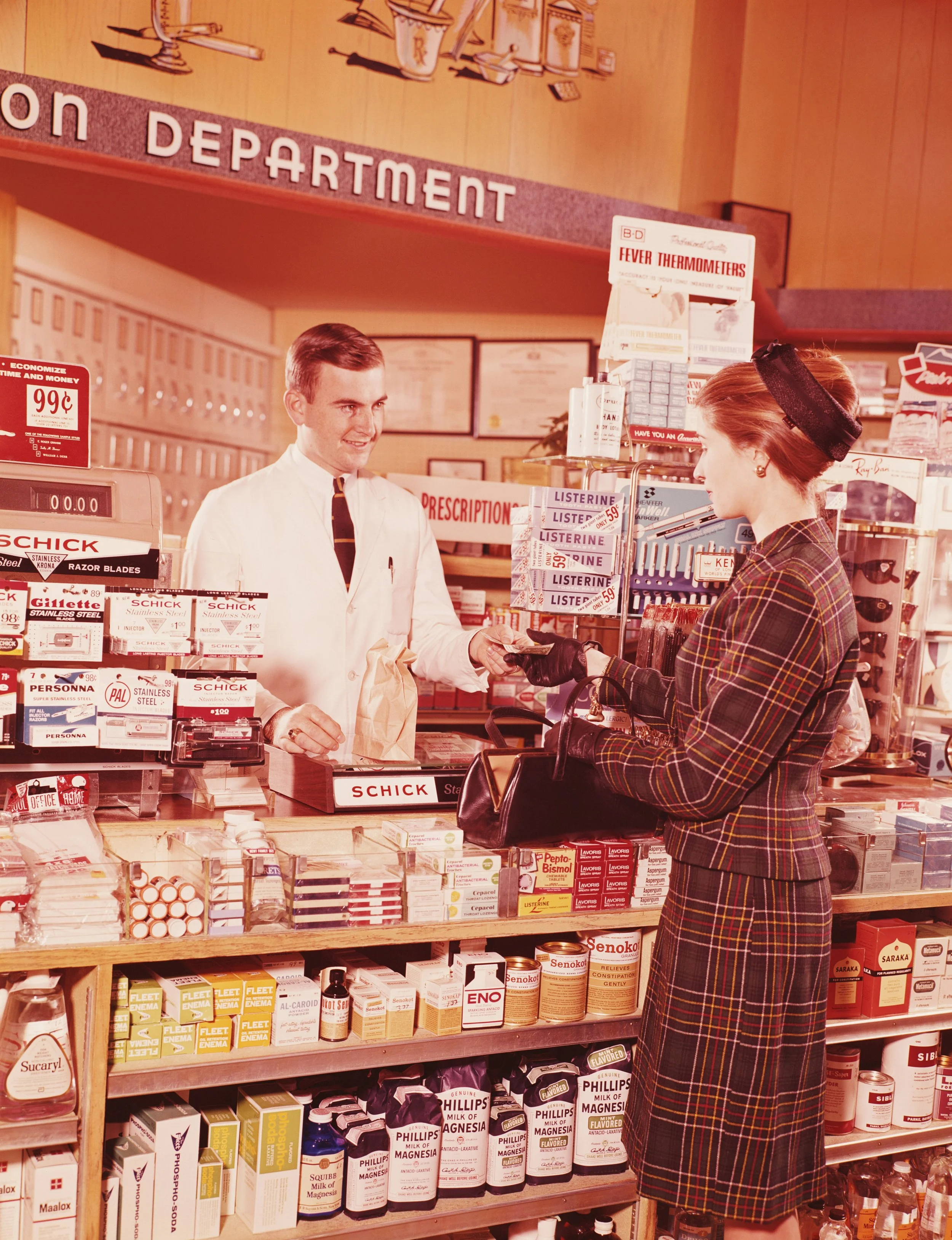
I think that most of us can agree that over the last few years, inflation has become out of control, and it has been hard to keep a decent budget in place. Years ago, before all of this craziness started, I did a deep dive into vintage living. I’ve always had a fondness for other time periods (not to overly glamorize them, but to pull from the things that did work back then). The simplicity was what I was craving as a new mother in 2017.
After a couple of years of feeling fed up with trying to stay on track, only to have prices get the best of us, I decided to look back at everything I had learned—pulling from resourceful housewives of the 1940s and thinking back to my own grandmothers. I decided to see what tips and tricks I could use in our modern day to be smart, frugal, and ahead of whatever economic situation might be occurring.
A Brief History of 1940s Rationing for Housewives
You can skip this part if you’re not interested, but I wanted to dive for a minute into what it really looked like in the 1940s. Sure, we have our struggles now, but I think most of us can agree that even in the hard times we may be facing, we at least have options available to us—many more than they did back then.
In the 1940s, families had to ration food items that we definitely take for granted, whether we’re on a tight budget or not. Foods like sugar, butter, meat, and coffee were limited due to war efforts. Families would receive a ration book filled with stamps that told them how much they could buy. If you’ve ever been on food stamps or WIC, you might have a better idea of how this may have felt.
Women were resourceful. They bought what they could, started victory gardens, practiced low-waste living, canned the goods they grew, and had to be very creative meal planners.
You may remember your grandmother saying things like “waste not, want not,” or “make do or do without.” This mindset helped households survive an extremely hard time, but it also strengthened communities and families through shared resources, support, and creativity.
These are tips that we can use today in our modern world to do better with not being wasteful, using up what we have, and getting more creative with our meal planning and grocery shopping.
1940s-Inspired Budgeting Tips for Modern Families
01. EMBRACE MEAL PLANNING
Just like 1940s housewives planned meals around rationed ingredients, you can stretch your grocery budget with intentional planning.
Shop seasonally: Focus on fresh produce that’s in season and more affordable.
Shop sales: In our tech-driven world, we can look up any store and see what sales are available to us. Review what is on sale, stock up when you can on items you know you will use while they’re cheaper, and plan meals around these deals.
Batch cook and freeze: Cook larger meals and freeze portions to save time and reduce food waste.
Limit processed items: Focus on whole foods and pantry staples like beans, rice, and oats. This is also better for your budget and your health!
02. COOK FROM SCRATCH
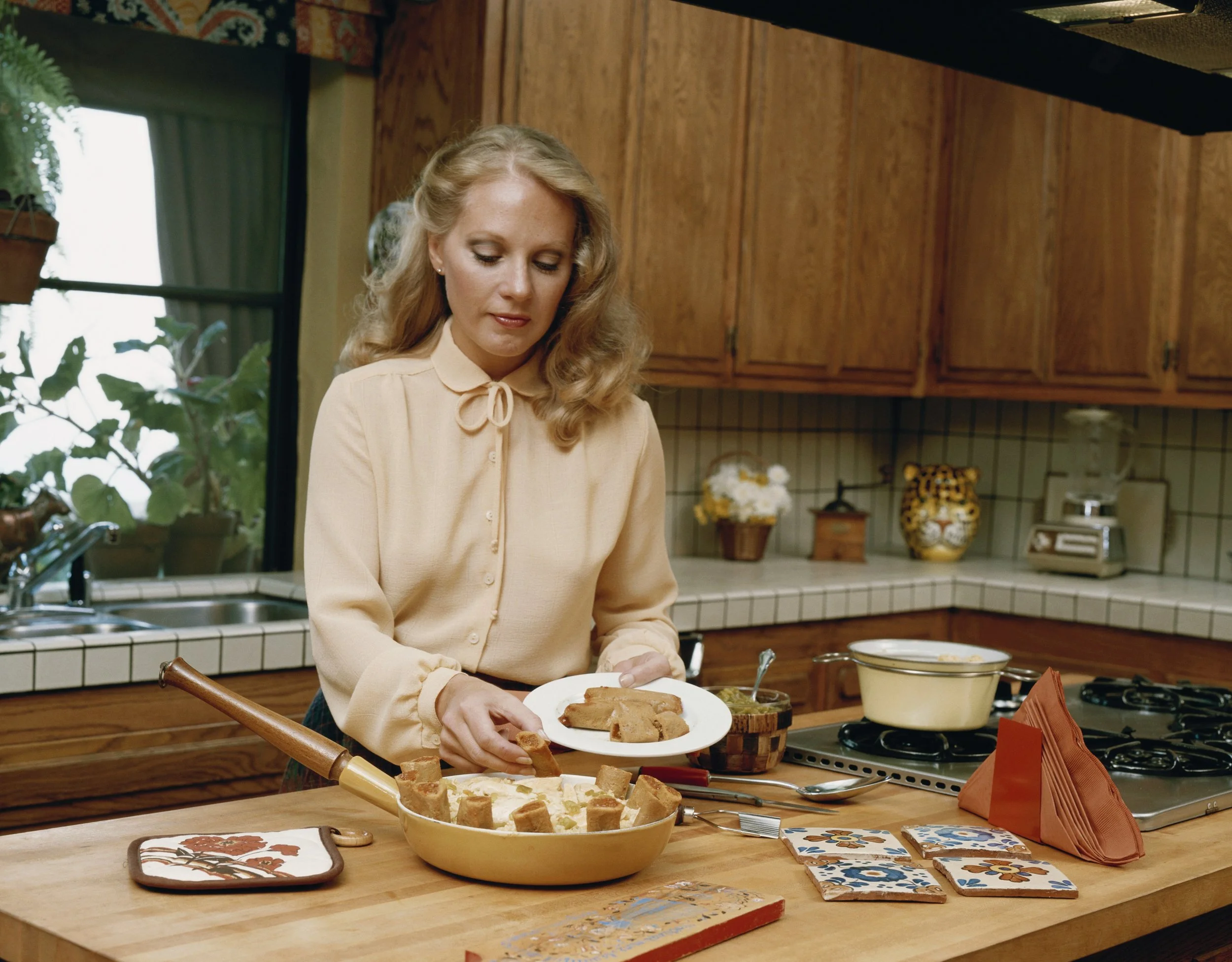
The 1940s housewife rarely relied on convenience foods. Get back to basics by learning how to make staples you normally buy from a box. Bulk items like flour, sugar, rice, and oats can be a base for many things that you may pay extra for when they’re prepackaged. Always check sales, and you know your schedule best—decide what might be a good shortcut to have versus what is worth spending a little more time making from scratch. We have a lot more available to us now, so do what you can while prioritizing your budget. Like I mentioned above, this does not only help your budget stay on track, but it can also improve your overall wellness.
Some of my favorite things to make from scratch instead of buying from a box now are:
Muffins & simple breads
Pancakes and waffles
Biscuits (super simple drop biscuits are amazing!)
Homemade gravy
Homemade pasta sauce
Veggie dip
Pudding
Fruit preserves and fillings

Frugal Dinner Ideas
These budget-friendly dinner ideas focus on affordable ingredients, hearty portions, and cozy comfort food. Perfect for families who want to save money, reduce food costs, and still enjoy satisfying homemade meals year-round.
03. PRACTICE MINDFUL SPENDING
Households in the 1940s prioritized needs over wants. Our society definitely has an overconsumption issue. Sure, things are often made with poorer quality now, and some items are even harder to repair (or unable to be repaired at all, even if you wanted to!), but overall, there is a lot more we can do without. Try not to get lost in the noise of what others are doing or have, and focus within your own home, your own family, and what you need. It is truly so much easier to feel like you’re not keeping up, but most lives we see online—or even in real life—may not be accurate. Always stay focused on your own budget and financial goals.
Prioritize essentials: Focus on food, housing, and utilities before discretionary purchases.
Limit impulse buys: Wait 48 hours before purchasing non-essential items. I always ask myself: Is this something I truly need? Can it wait? Do I have something I can use up before buying it?
Embrace thrift stores: Shop secondhand for clothing, furniture, and home goods. These days, you can find some amazing things in thrift shops. Bonus—look for consignment shops near you to sell your old clothing or your kids’ clothes at the end of the season. I’ve started making this a seasonal tradition: clean out, sell, and then put that money back into clothing for the kids or household essentials. You’d be surprised how much you can save this way!

04. GET CREATIVE WITH REPAIRS, DIY & HOMEMADE LIVING
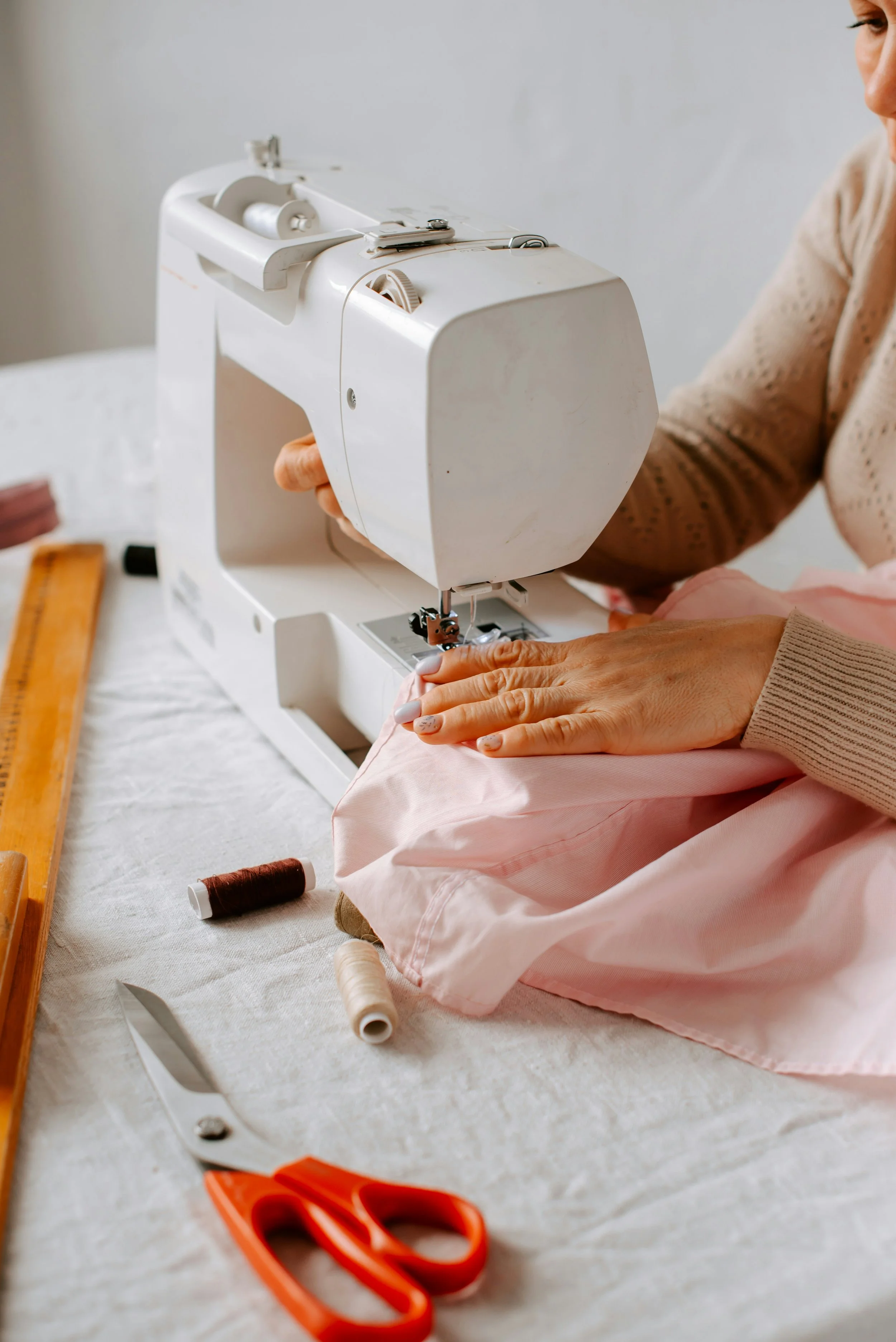
In the 1940s, repair skills and creativity were essential parts of everyday life. Instead of replacing items, families learned how to sew, patch clothing, and fix simple household things. This mindset is something we can absolutely bring back into our modern homes. Learning basic skills like sewing, mending, or simple repairs can save money and help you make better use of what you already have. Pinterest and YouTube are fantastic modern resources for learning these skills.
DIY doesn’t stop at repairs—it can also be a fun and meaningful way to decorate your home. Making your own decorations, especially for holidays, or having your kids create crafts to decorate with adds a personal touch you just can’t buy in a store. Thrifted items can easily be reworked or refreshed to add vintage-inspired touches to your home décor, often for very little cost.
The possibilities with DIY are truly endless, and one of the best parts is that it gets you working with your hands and away from screens. If you’re trying to limit technology and embrace a simpler, slower lifestyle—similar to how a 1940s housewife lived—this is a wonderful place to start. This has been a big goal of mine over the years, and it’s something that continues to bring so much value to our everyday life.
05. A MODERN SPIN: SAVE WITH CASH-BACK APPS
If your grandmother were around for these cash-back apps, you know she would be all over them. She can shop and get money deposited back into her account—can you imagine anyone in the 1940s not taking advantage of such a tool?
Over the past couple of years, I’ve tried out a few different ones, and I’ve literally gotten hundreds of dollars back. One surprised me—I had forgotten I had it attached to a credit card and ended up getting $400 deposited into my bank account over the summer. What a difference that made.
You might have a credit card like that too, so first, check any cards that may have cash-back or rewards and see what money you might have that you didn’t even know about.
Next, check out some of these apps that I literally use every time I shop:
Ibotta: Earn cash back on groceries and household essentials. It will also remind you if you missed something in a store you have one of those reward cards with. I probably earn back the least with this, but it is still worth doing!
Use my code ntvkyqj to get started
Rakuten: Save on online shopping with cash-back offers and discounts. This is so easy if you use the little plug-in on the computer too, becuse it will remind you how much cash back you can get! I always make sure to use
Fetch Rewards: Scan your grocery receipts for points that can be redeemed for gift cards. You can literally scan any recipet, but some get you a lot more points back, there is zero reason to not use this. Tupically I save up and twice a year I use for Amazon for our personal products or gifts! If you are not using this, use my link here and get extra points when you sign up! You won’t regret using this one!
Download the App: Available on iOS and Android. USE MY CODE FOR EXTRA POINTS: YBT71R
Upside: We use this to get gift cards back for what we spend on gas (we usually opt for the Target Gift Card during Christmas to save extra money!)
Capital One Shopping: Automatically finds coupon codes and compares prices while you shop online to help you get the best deal. It can also alert you if the price drops after you’ve looked at an item, so you don’t have to do the work yourself. I have saved over $100 dollars this year alone using this! I still don’t know exactly how it works with Amazon, but it does, and it shows a lower price, which gives you the discount. So it is worth looking into. If you use my link, you can also get a bonus of up to $80.00 back too!
With just a little planning ahead and intentionality, we can better prepare ourselves for any economic hardships that may come our way. By being mindful now and teaching our kids to be more resourceful, I truly believe we can help limit some of the overconsumption in our society—something that can directly improve the financial stability of our children’s future.
Living like a 1940s housewife isn’t about glamorizing or idolizing the past. It’s about taking what worked for previous generations and thoughtfully applying those lessons to our modern world. By being mindful, using the tools we have available to us today, and choosing to live more simply, we can create a better, more intentional life for ourselves and our families.
Explore more on the Blog
vintage inspo




homemaking